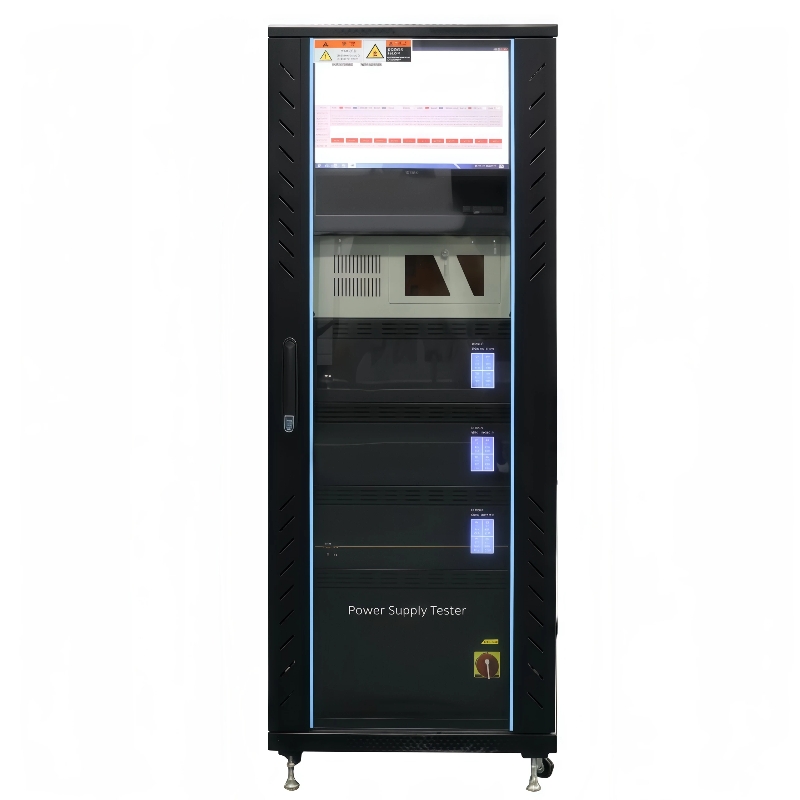
LT-PV-PID20
Power Supply System - PID
Potential Induced Degradation (PID) refers to performance attenuation occurring in crystalline silicon photovoltaic modules triggered by stray leakage currents. This phenomenon can result in power output reductions as high as 30%. It is a PID test standard derived from IEC62804-1: System Voltage durability test for crystalline silicon modules.
- Product Model:
- LT-PV-PID20
- Design Standard:
- IEC62804-1
Description
Application:
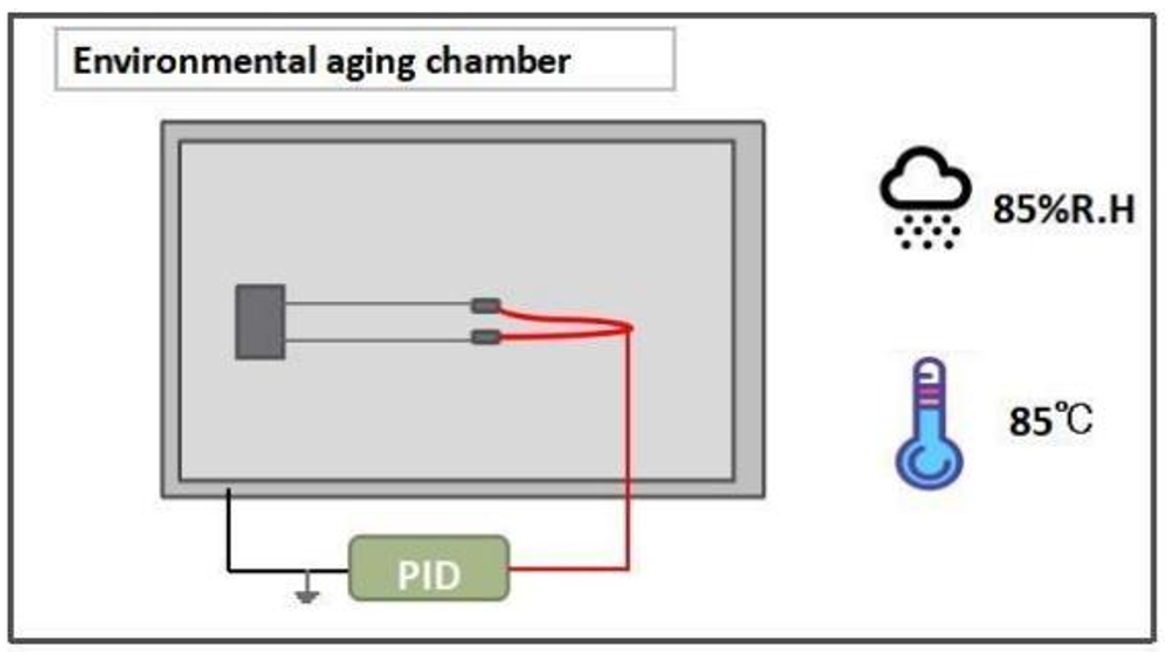
Potential Induced Degradation (PID) refers to performance attenuation occurring in crystalline silicon photovoltaic modules triggered by stray leakage currents. This phenomenon can result in power output reductions as high as 30%. It is a PID test standard derived from IEC62804-1: System Voltage durability test for crystalline silicon modules. The test requirement is placing the component in a certain temp/humi environment, connecting the internal conductor of the component to one stage of the high-voltage power supply, and connecting the external conductor of the component to the other pole of the high-voltage power.
Specifications:
| Device dimension | W600 x D600 x H 1600mm |
|---|---|
| Input Voltage | AC 220 ± 10%, 50/60Hz (can be customized) |
| Output Voltage | DC -2000 to +2000 (Continuously adjustable), resolution 1V |
| Voltage accuracy | 1000V 1500V 2000V Voltage fluctuation within 500 hours of continuous output≤2% |
| Rated current | 250 microamps/channel |
| Current accuracy | 1 microampere + 1 range |
| Protective devices | Over current, over voltage, over temperature, short circuit protection |
| Working time setting | 0-9999H59M59S |
| Standard configuration | a. 1x PIC power supply; b. 1x computer; c. Component border connecting wires (20 pcs); d. Component MC4 connectors (20 set or customized) |
Test process:
This PID power supply requires 20 channels of output, which can provide multiple components for simultaneous testing. The voltage can be continuously adjusted, and the voltage parameters can be displayed in real-time for easy monitoring (the number of channels can vary according to customer needs).
The 20 power sources are independent of each other and can output different polarity and voltage values at the same time (the number of channels can vary according to customer needs). The system has a current display function, and the 20 channel currents are displayed simultaneously (the number of channels can vary according to customer needs).
The test condition as follow: